










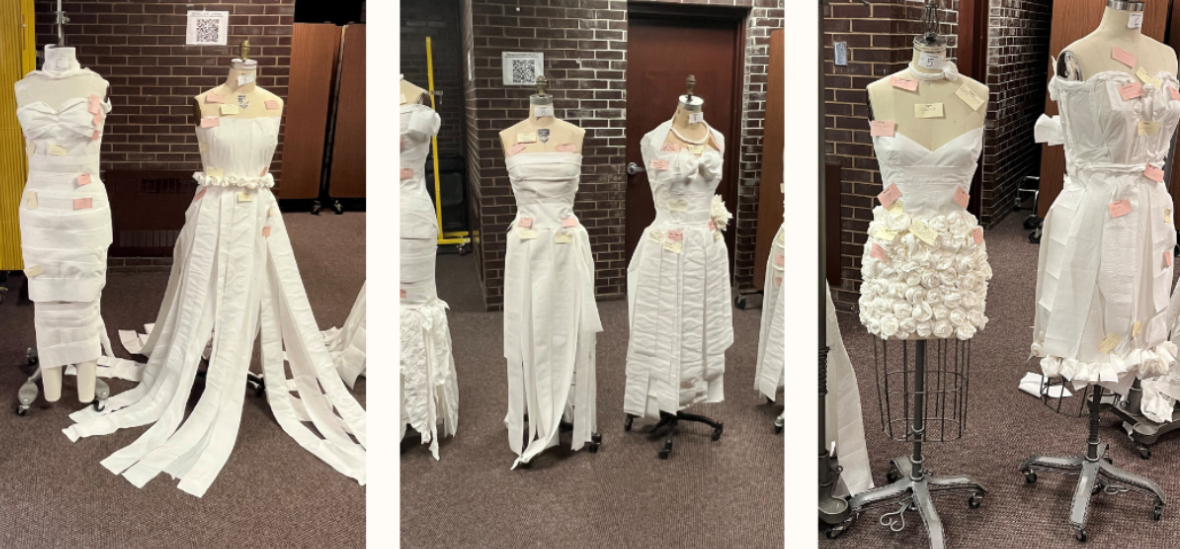
Design Studio students recently took creativity to a whole new level by designing wedding dresses made entirely from toilet paper. This unique project allowed students to explore and showcase the Elements and Principles of Design in a fun and challenging way. The elements of design, including color, line, space, texture, shape, and form, guided students as they transformed a simple, everyday material into wearable art.
By carefully considering principles of design such as emphasis, rhythm, harmony, proportion, and balance, each dress became a distinctive piece that reflected thoughtful design. A total of 26 students participated across five class periods, working in groups of two. Students were also allowed to use scissors, pins, and glue.
Students first sketched their design ideas, labeling how the elements and principles of design would appear in their final dresses. Each group also completed an inspiration sheet, which required them to find a picture that inspired their design and to note how the elements and principles were represented.
They included the designer, price, and a link to the dress, and they outlined the roles and responsibilities of each group member. This process encouraged careful planning and collaboration before they began working with the toilet paper.
The project was judged using a detailed rubric. Time management and teamwork were worth four points, which included dividing work evenly, using class time wisely, cleaning up materials correctly, and trying their best. Creativity, tags, and inspiration sheets were each worth two points. For the tags, students had to neatly pin all elements and principles of design on their dresses, showing that they could identify and apply design concepts.
The inspiration sheet reinforced critical thinking by connecting their design to real-world fashion examples.
Once the dresses were completed, students and teachers voted on their favorites to determine first, second, and third place winners. The top three groups were rewarded with donuts, adding a sweet incentive to the challenge.
Students experimented with flowing lines and intricate textures, demonstrating how even unconventional materials can communicate elegance and style. The finished dresses are now on display, allowing the school community to celebrate the students’ imagination, skill, and understanding of design concepts in a memorable way.
This toilet paper wedding dress project gives students hands-on experience with skills used in fashion careers, such as designing, sketching, and experimenting with materials. Working in teams mirrored the collaborative environment of professional fashion studios. The project also teaches creativity, problem-solving, and attention to detail, all essential for a career in fashion design or styling.
“I love this project because it allows students to be creative while working with a partner,” said Ms. Millsap, the family and consumer sciences teacher.
“Our initial sketch was very different from our final design. I enjoyed working with a partner because we could share ideas and improve the design together. The most fun part was the conversations we had while making the dress,” said Mya Escalante.